All you need to know about Myoelectric Prostheses
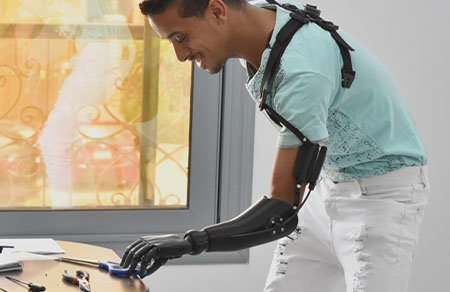
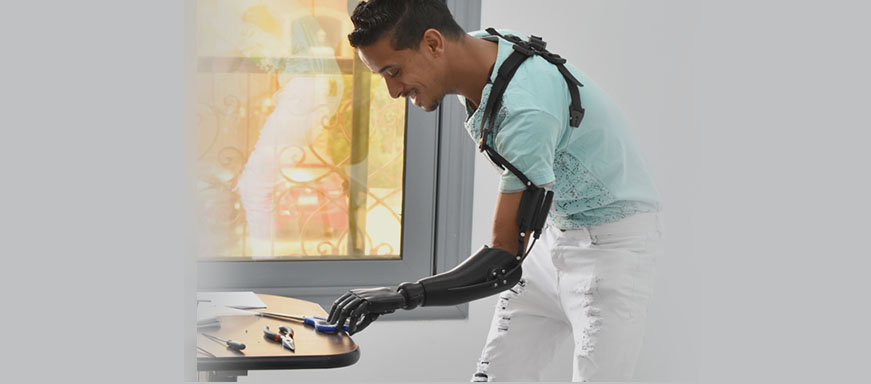
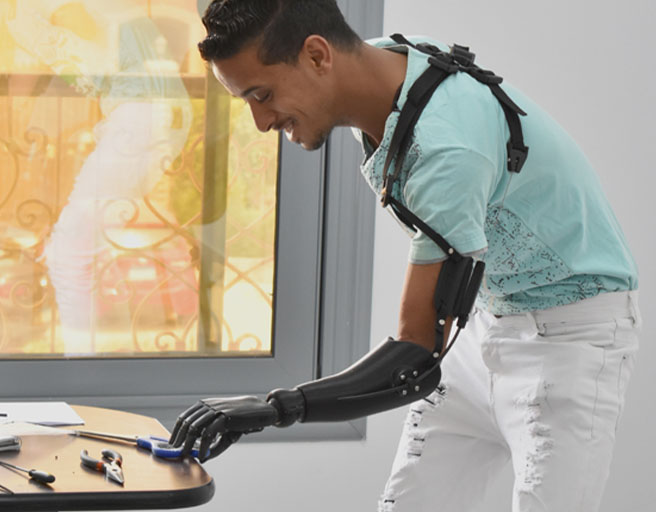
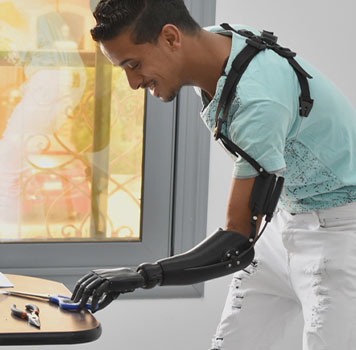
Myoelectric prostheses have motors and batteries on board to power the movement of the
devices that are ultimately controlled by input from electrical signals generated by muscles in
the residual limb. When muscles are contracted, they give off an electrical signal. In
prosthetics, electrodes sitting on the skin inside the socket detect these muscle signals and
send them to a controller, which triggers movement to correspond to what the user intends. When
you want to close the hand, you squeeze your muscles that correspond to closing and the hand
will close. Technologies now exist to make this even more intuitive for individuals to control
multiple features in an arm such as grasping patterns in a hand, wrist rotators, elbows and even
shoulders.
Myoelectric prostheses have a number of advantages over body-powered devices, such as less
harnessing, access to effortless strength and diverse grasp patterns, more natural hand
movements, and, with the aid of TMR surgery (see below), more intuitive control of the
prosthesis. When not wearing a cosmetic glove, they might provide a "cool, robotic look" that
some people find attractive. Myoelectric are frequently cited as having a wet-weather
restriction. Recent advances in waterproofing technology for some terminal devices and elbows
have also helped to overcome that (though, in general, they still cannot be submerged in
water).
All types of upper limb loss can be accommodated by myoelectric methods. Here, we go over a few
possibilities:
Myo Electric Fingers
Individually powered prosthetic fingers can bend, touch, pick up, and point as electric finger options for people with finger amputations. There are options for replacing all missing fingers with electric finger replacements that mimic normal finger movement.
Myoelectric Hands
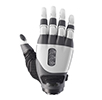
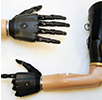
Single-motor hands and hands with many joints are the two varieties of myoelectric
hands. All that they are capable of doing is opening and closing with a single motor. However,
they can be hidden by a glove that appears to be part of your hand so that others might not
notice when they take a quick look at you.
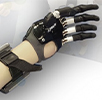
Myoelectric multi-articulating hands come in a variety of sizes and configurations from a number
of vendors. The following are some of the popular gadgets:
- This Taska Hand
- The bionic.
- The i-limb.
- A Hand by Michelangelo
Myoelectric Hooks
For fine, precise tip pinching, strong pinching, durability, and waterproofness, an electric hook may occasionally be the ideal tool. There are various types of electric hooks, including:
- ETD
- ETD2
MyoElectric Elbows
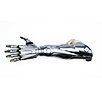
Elbows have the responsibility of assisting in the terminal device's pre-positioning in space. With an electric elbow, elbow movement can still be controlled by placing electrodes on the skin's surface even if a person lacks the strength or capacity to use a body-powered elbow. Some elbows can even lift and retain rather hefty loads, which makes carrying objects over the forearm considerably simpler. To increase your chance of success, you may find certain qualities of each elbow to be crucial. There are numerous elbows available for purchase, including:
- UtahArm 3+
- DynamicArm
- Aspire
An investigation into targeted muscle reinnervation surgery may be necessary for patients with amputation levels above the elbow or at the shoulder. In that operation, the surgeon "reassigns" nerves that once controlled the hand or arm muscles to the remaining limb or chest. This enables the user to control a myoelectric device more effectively and lessens the likelihood of developing painful neuromas, which are bundles of severed nerves that form after an amputation.